
Mango, papaya, passion fruit: these notes exist in perfumes, but not in nature as we imagine them. Nose demystifies how they are constructed — and explains how to tell them apart from versions that take the easy route.
A fantasy reconstructed molecule by molecule
Most exotic notes are olfactory fictions. Mango, passion fruit and papaya do not exist in the form of usable extracts in perfumery — they are reconstructed from synthetic molecules that reproduce their perception. This is not a flaw: it is the reality of olfactory composition for these materials.
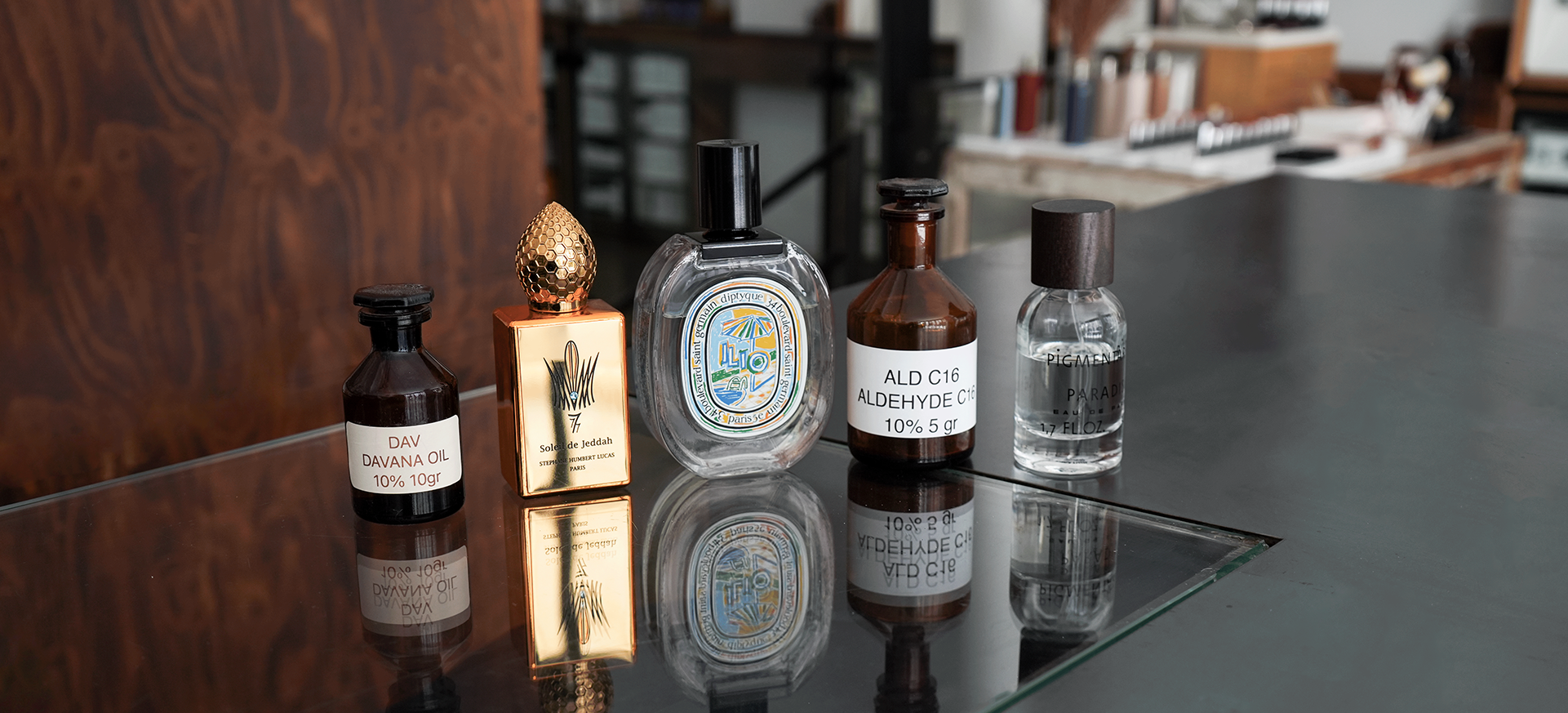
To amplify the tropical effect, some perfumers add C16 aldehydes or davana — a plant with fruity-green accents that reinforces the cocktail dimension and brings a light vegetal touch. Two technical levers that can push a fragrance towards something more complex or, on the contrary, more sugary.
Two distinct approaches
This is where the perfumer's hand makes all the difference. Two approaches are recommended to lift exotic notes out of the mainstream register: either adding luminous florals such as mimosa or magnolia, which bring lightness and precision; or introducing bitter notes — rhubarb above all — which break the sweet roundness and give the fragrance a sharper character.
Discover our selection of fragrances with exotic notes below.