In this new episode of Masternose, Nose explores salty notes in perfumery — ingredients that evoke the beach, warm sand, and seawater, even though salt itself does not actually exist as a perfumery raw material.
The Scent of the Beach
Beach fragrances are often reduced to the smell of monoï. This is a shortcut: the olfactory impression of the seaside in perfumery is a far more complex construction, relying on several distinct families of materials — floral, aquatic, and ambery — to recreate an overall beach-like sensation.
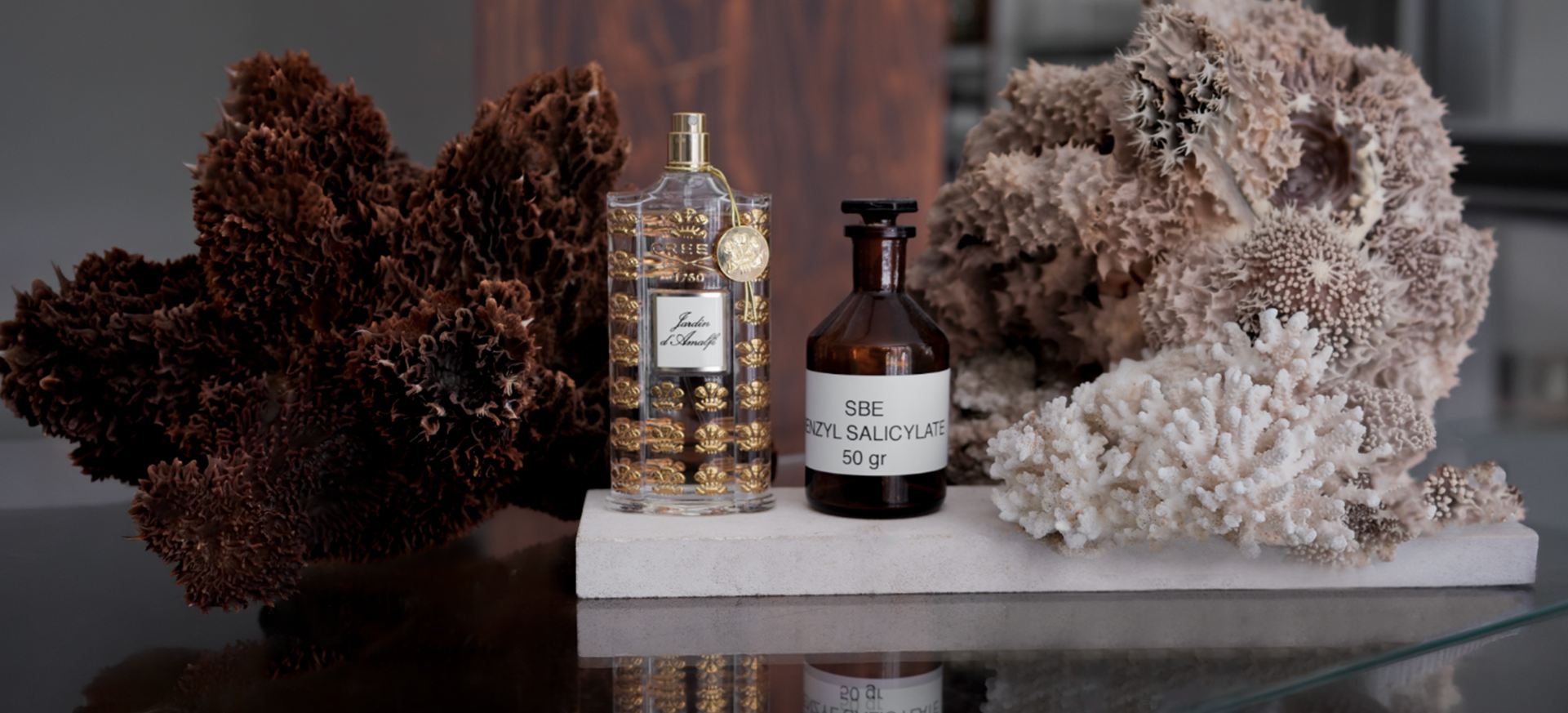
Salicylates: Warm Sand and Exotic Florals
Salicylates are molecules frequently used to create this warm, slightly salty sand effect. They work in combination with exotic white florals such as tiare flower, frangipani, and ylang-ylang. Together, they form the solar and tropical signature of beach-inspired fragrances.
Materials such as passion fruit can also contribute to this construction, bringing an exotic and fruity dimension — a facet that evokes coastal flora rather than the sea itself.
The Aquatic Effect
To push the marine sensation further — humidity, sea spray, and fresh water — perfumers may turn to other molecules such as Helional, Cyclamen Aldehyde, aldehydes, and Calone. These materials create what is known as a “watery” effect: an aqueous freshness that evokes the surface of the water more than the shoreline.
Creating the Illusion of Salt
This is the central paradox of salty notes: salt itself cannot be translated into an olfactory raw material. To simulate its perception, Mark Buxton uses modern amber molecules — Ambermax, Amber Xtreme, and Amberketal — synthetic materials with sharp, mineral facets that evoke salt without reproducing it.
Watch this episode of Masternose and discover our selection of fragrances featuring salty notes on our diagnostic